

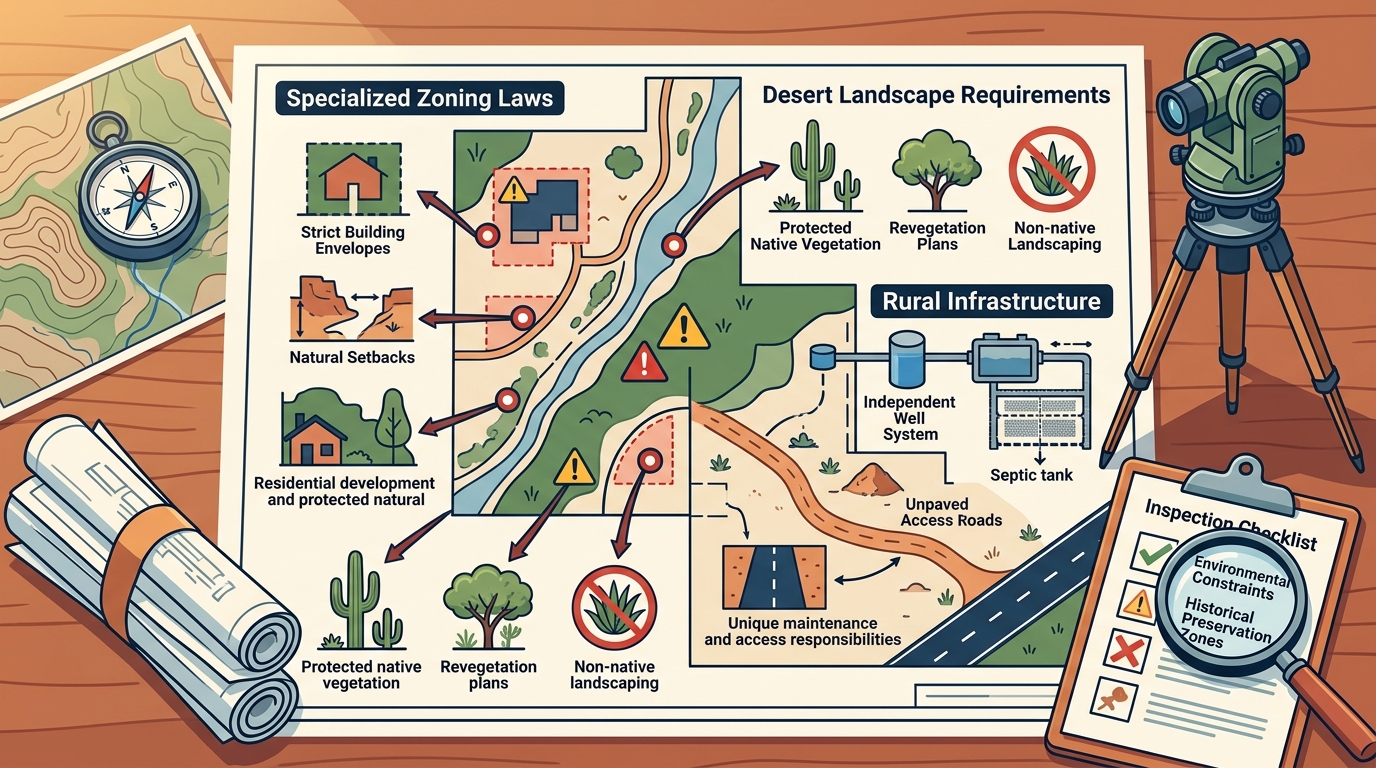
Real estate transactions in Cave Creek, Arizona, are uniquely complex due to the area's specific zoning laws, desert landscape, and rural infrastructure. According to recent market data, properties in this region often take longer to sell than the national average due to these specialized requirements. Failing to account for these nuances can lead to significant financial losses for both buyers and sellers. This guide outlines the critical errors to avoid when navigating the Cave Creek real estate market.
Understanding Cave Creek Zoning and Land Use
One of the most frequent mistakes agents make is underestimating the complexity of Cave Creek's zoning regulations. The area is largely rural, with specific designations that dictate what can be built on a parcel of land. Ignoring these restrictions can lead to failed development plans or unexpected legal hurdles.
Residential vs. Agricultural Designations
Properties in Cave Creek often fall under Agricultural (AG) or Residential (R) zoning categories. Each has distinct requirements for minimum lot sizes, building setbacks, and permitted structures. For instance, an AG zone might require a minimum of five acres, while an R zone might allow smaller lots but restrict certain types of outbuildings. Agents must verify the exact zoning classification before listing or purchasing land.
Impact Fees and Utility Access
Another critical factor is the availability of utilities. Many properties in Cave Creek are not connected to municipal water or sewer systems. Instead, they rely on private wells and septic tanks. Agents who fail to disclose the status of these utilities or the associated impact fees can face liability issues. It is essential to provide buyers with clear information about utility access and costs.
For more details on local zoning regulations, you can visit the City of Cave Creek official website.
Water Rights and Well Water Pitfalls
Water is a scarce and valuable resource in Arizona. A common mistake in Cave Creek real estate is the improper handling of water rights and well water testing. Buyers and sellers must understand the legal and practical implications of water access.
Well Water Testing Requirements
Before closing a deal, it is crucial to conduct a comprehensive well water test. This includes checking for water quality, flow rate, and depth. Agents who skip this step risk exposing their clients to costly water treatment needs or even the discovery that the well is dry. According to the Arizona Department of Water Resources, water rights are tied to the land and must be transferred properly during a sale.
Septic System Compliance
Similarly, septic systems must meet current health department standards. Older systems may not comply with new regulations, requiring expensive upgrades. Agents should advise sellers to have their septic systems inspected and certified before listing to avoid delays in the closing process.
Inspection Errors in Desert Environments
The desert environment presents unique challenges for property inspections. Agents who rely on standard inspection checklists may miss critical issues specific to Cave Creek properties.
Foundation and Soil Stability
Soil composition in Cave Creek can vary significantly. Some areas have expansive clay soils that shift with moisture changes, potentially causing foundation cracks. Inspectors must evaluate the foundation's integrity and look for signs of soil movement. Agents who overlook this may expose buyers to structural repair costs.
Pest and Wildlife Damage
Desert pests, such as termites and scorpions, are common in the area. A thorough pest inspection is essential. Additionally, wildlife damage to fencing and landscaping should be noted. Agents who fail to address these issues may find themselves negotiating repairs after the inspection phase.
For guidance on home inspections, refer to the National Association of Home Inspectors standards.
Pricing Strategies for Acreage Properties
Pricing acreage properties in Cave Creek requires a nuanced approach. Unlike suburban homes, land value is influenced by factors such as topography, views, and accessibility.
Comparative Market Analysis (CMA) Limitations
Standard CMAs may not be sufficient for unique properties. Agents must adjust for differences in lot size, terrain, and amenities. Overpricing based on recent sales of dissimilar properties can lead to a stagnant listing. Underpricing can result in lost revenue for sellers. A precise valuation is key to a successful transaction.
Marketing the Lifestyle
Cave Creek is known for its equestrian lifestyle and natural beauty. Listings should highlight these features to attract the right buyers. Agents who focus solely on square footage may miss the emotional appeal of the property. High-quality photography and virtual tours are essential to showcase the land's potential.
Contractual Oversights in Rural Sales
Rural transactions often involve complex contracts that differ from standard residential agreements. Agents who use generic contract forms may leave critical gaps in protection.
Contingencies for Land and Utilities
Contracts should include contingencies for well water testing, septic inspections, and zoning verification. These clauses protect buyers from unforeseen issues and provide sellers with a clear path to closing. Agents who omit these contingencies risk deal failures and legal disputes.
Disclosure Requirements
Arizona law requires specific disclosures for rural properties. Agents must ensure that all known issues, such as flood zones or easements, are disclosed in writing. Failure to disclose can lead to post-closing litigation. Transparency is vital for maintaining trust and ensuring a smooth transaction.
For legal insights on real estate contracts, consult the Arizona Bar Association resources.
Marketing Gaps for Luxury Listings
Cave Creek is home to many luxury properties. Agents who fail to market these homes effectively may struggle to find qualified buyers.
Targeted Audience Reach
Luxury buyers often have specific criteria, such as privacy, views, and equestrian facilities. Marketing materials should highlight these features. Agents who use broad, generic marketing strategies may not reach the right audience. Specialized platforms and networks are essential for reaching high-net-worth individuals.
Professional Staging and Photography
High-end properties require professional staging and photography to showcase their best features. Agents who cut corners on presentation may undervalue the property. First impressions matter in the luxury market. Investing in quality marketing materials can significantly impact the sale price and time on market.
Key Takeaways
- Zoning Complexity: Cave Creek's rural zoning requires careful verification of land use rights and building restrictions.
- Water Rights: Proper handling of well water and septic systems is critical to avoid post-closing liabilities.
- Inspection Nuances: Desert-specific inspections for soil stability and pests are essential for accurate property assessment.
- Pricing Accuracy: Acreage properties need customized valuations that account for terrain and utility access.
- Contract Specificity: Rural transactions require specialized contracts with robust contingencies for land and utilities.
- Luxury Marketing: High-end listings demand targeted marketing and professional presentation to attract qualified buyers.
- Regulatory Compliance: Adherence to Arizona disclosure laws and local regulations is non-negotiable for legal protection.
Frequently Asked Questions
What are the main zoning challenges in Cave Creek?
The main zoning challenges involve distinguishing between Agricultural and Residential designations, which dictate lot sizes and building permissions. Agents must verify these classifications to ensure compliance.
How important is well water testing in Cave Creek?
Well water testing is critical because many properties rely on private wells. Testing ensures water quality and flow rate, preventing costly surprises for buyers.
Why do Cave Creek homes take longer to sell?
Homes in Cave Creek often take longer to sell due to the specialized nature of the market, including zoning, water rights, and the rural lifestyle appeal.
What should be included in a rural property contract?
A rural property contract should include contingencies for well water, septic systems, and zoning verification to protect both parties.
How can I market a luxury acreage property effectively?
Effective marketing involves highlighting the lifestyle benefits, using professional photography, and targeting niche audiences interested in equestrian or rural living.
Are there specific disclosure requirements for rural homes?
Yes, Arizona law requires disclosures for known issues such as flood zones, easements, and utility access. Agents must ensure all disclosures are accurate and complete.
What is the role of a local agent in Cave Creek?
A local agent provides expertise in zoning, water rights, and market trends, ensuring a smooth and informed transaction for buyers and sellers.
Contact Michelle Horowitz
Navigating the Cave Creek real estate market requires local expertise and attention to detail. Michelle Horowitz specializes in helping clients avoid common mistakes and achieve their real estate goals. Whether you are buying or selling, her guidance ensures a successful outcome.
Contact Michelle Horowitz today to schedule a consultation and start your journey with confidence.