
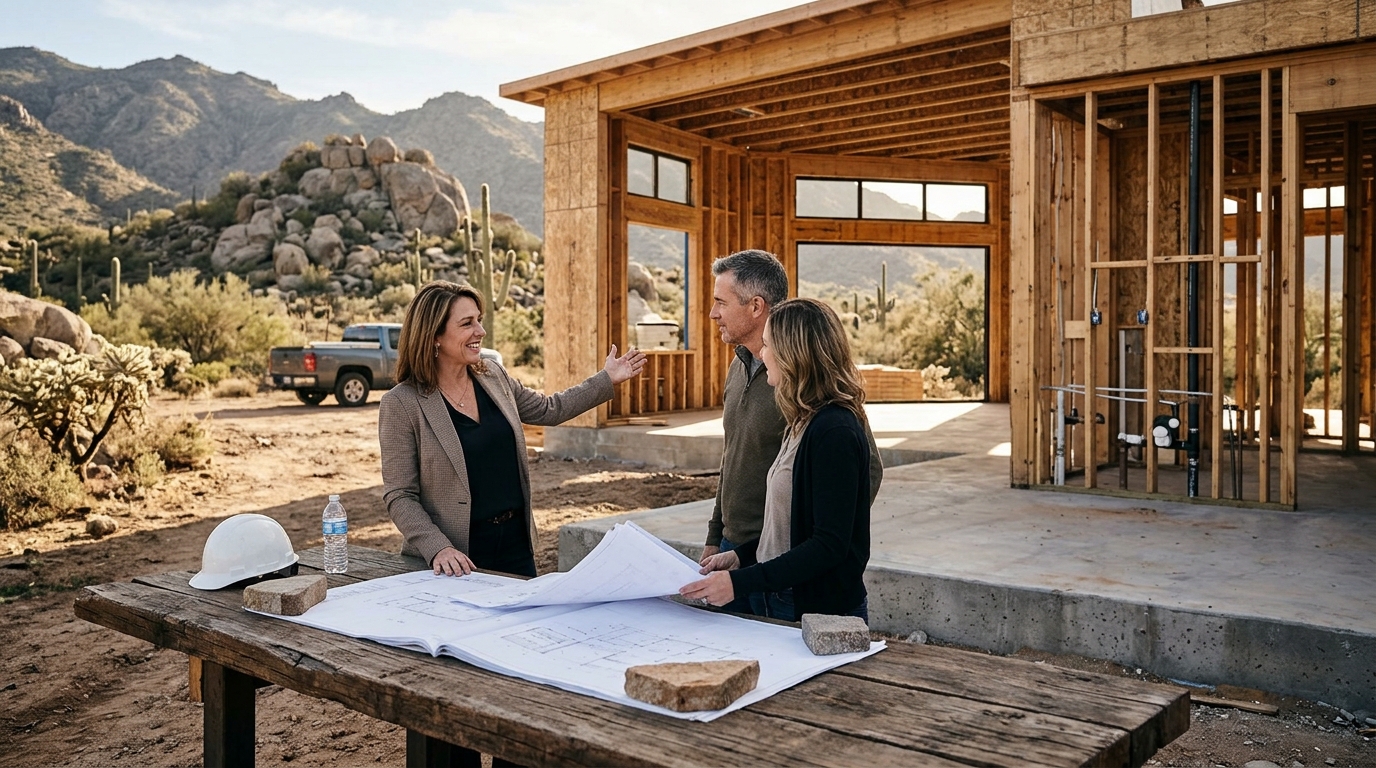
Working with custom home builders in Cave Creek requires a deep understanding of local zoning, soil conditions, and the specific phases of construction. Unlike standard tract homes, custom builds in this area demand strict adherence to the Maricopa County unincorporated area regulations. Buyers must prepare for a longer timeline and a more involved design process. This guide outlines the critical steps to ensure your build is successful and compliant with local standards.
Understanding the Cave Creek Build Environment
Cave Creek is located in the unincorporated area of Maricopa County, which creates a unique regulatory landscape for construction. The primary challenge for builders and buyers is the lack of a municipal building department. Instead, the Maricopa County Building and Safety Department oversees all permits and inspections. This distinction is critical because the rules for septic systems, well water, and setbacks differ significantly from those in incorporated cities like Scottsdale or Phoenix.
The implication for buyers is that they must verify their builder’s experience with unincorporated county builds. A builder who primarily works in Scottsdale may not be familiar with the specific permitting nuances of Cave Creek. You should ask for examples of recent projects completed in the area to ensure they understand the local workflow.
The Role of a Real Estate Agent in Custom Builds
A real estate agent is not just a transaction closer; they are a strategic advisor throughout the build process. In the context of custom homes, the agent’s role shifts from negotiating a sale price to negotiating the construction contract. This contract is among the most important document in the entire project. It defines the scope of work, the payment schedule, and the remedies for delays or defects.
Michelle Horowitz, a REALTOR® with Berkshire Hathaway HomeServices Arizona Properties, brings over 25 years of experience to this process. Her background includes working alongside a respected real estate attorney, which provides a unique perspective on contract risk. This legal awareness helps clients identify potential pitfalls in builder contracts before they are signed. The agent also manages the timeline, ensuring that the construction schedule aligns with the client’s life plans and financing deadlines.
The implication is that clients should not view the agent as a passive observer. The agent should be present at key milestones, such as the foundation pour and the final walkthrough. Their presence ensures that the builder adheres to the agreed-upon specifications and that any changes are documented in writing.
Navigating Financing and Construction Loans
Financing a custom home is different from financing a move-in ready property. Most buyers use a construction-to-permanent loan, which has two distinct phases. The first phase is among the construction loan, which disburses funds in draws as the project progresses. The second phase is the permanent mortgage, which begins after the home is completed and inspected.
The draw process requires the lender to inspect the site at various stages to verify that the work is complete. If the builder fails to meet the milestones, the lender will hold back funds, which can stall the project. This creates a financial risk for the buyer if they are paying the builder directly. A well-structured contract should align the builder’s payment schedule with the lender’s draw schedule to prevent cash flow issues.
The implication is that buyers must maintain a clear line of communication between the builder, the lender, and the agent. Any delay in the construction timeline can result in interest-only payments extending longer than expected. This can significantly increase the total cost of the project. Planning for these contingencies is essential for financial stability.
Managing the Design and Construction Timeline
The timeline for a custom home in Cave Creek typically ranges from 12 to 18 months, depending on the complexity of the design and the season. The design phase usually takes three to six months, during which the architect and engineer finalize the plans. The construction phase then begins, with the foundation taking several weeks to cure before framing can start.
Weather is a significant factor in the timeline. Cave Creek experiences extreme heat in the summer, which can slow down certain construction activities. Concrete pouring, for example, requires specific temperature conditions to cure properly. Builders often schedule these tasks for the cooler months of fall and spring. This seasonal planning must be built into the initial contract to avoid unrealistic expectations.
The implication is that buyers should build a buffer into their move-in date. Delays are common in custom construction, and having a flexible timeline reduces stress. The agent can help manage these expectations by providing regular updates on the project’s progress and any potential delays.
Key Takeaways
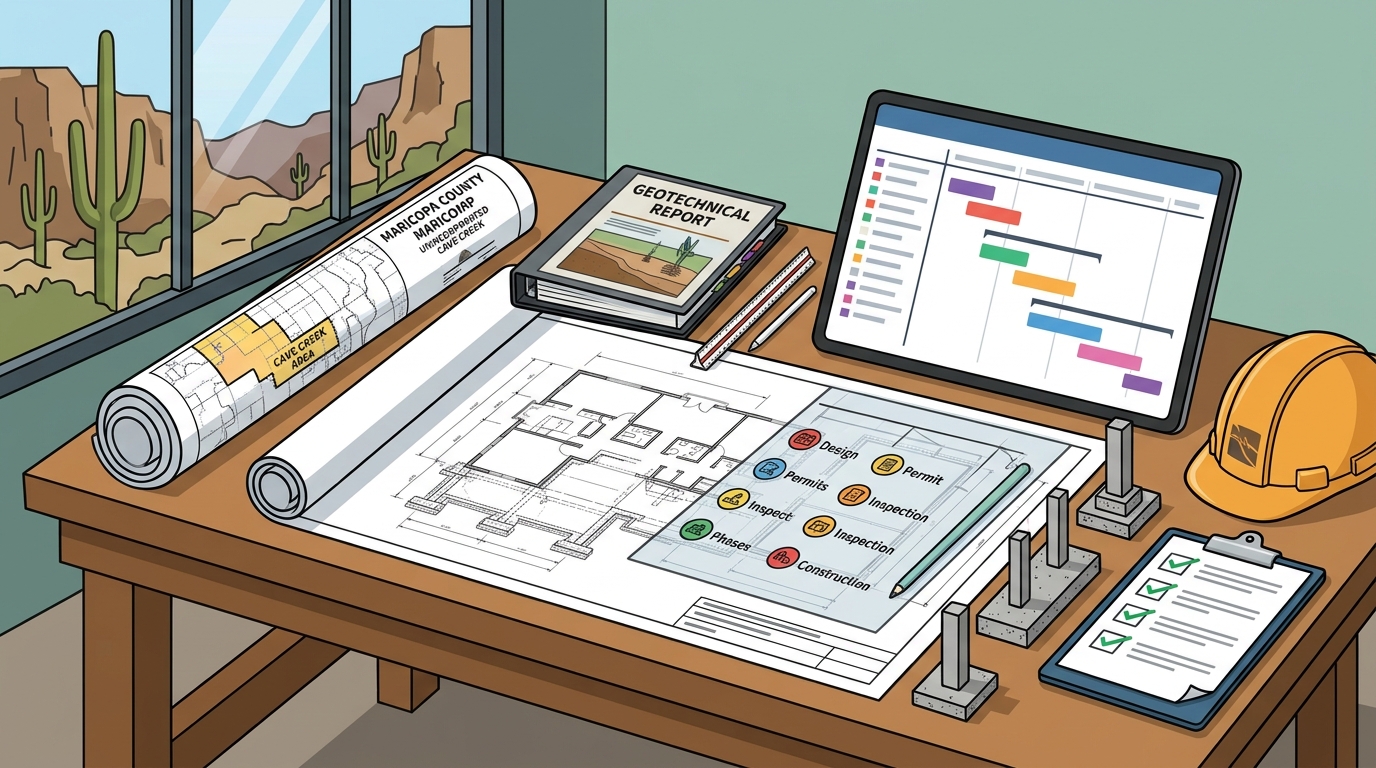
- Cave Creek is in the unincorporated area of Maricopa County, requiring specific county permits for septic and well systems.
- Expansive clay soils in the region necessitate a geotechnical engineering report to determine the correct foundation type.
- The construction contract is the most critical document, defining scope, payment, and remedies for delays.
- Construction-to-permanent loans disburse funds in draws, requiring strict alignment between the builder and lender.
- Extreme summer heat in Cave Creek can slow construction, making seasonal planning essential for the timeline.
- A real estate agent with legal and construction experience provides strategic oversight throughout the build.
Frequently Asked Questions
How long does it take to build a custom home in Cave Creek?
It typically takes 12 to 18 months, including the design and construction phases. The timeline can vary based on the complexity of the design and weather conditions.
What is the main difference between building in Cave Creek and Scottsdale?
Cave Creek is in the unincorporated area of Maricopa County, so it follows county regulations rather than municipal codes. This affects permitting for septic systems and well water.
Do I need a real estate agent if I am building a custom home?
Yes, an agent helps negotiate the construction contract, manages the timeline, and ensures the builder adheres to specifications. They provide strategic oversight throughout the process.
What is a construction-to-permanent loan?
It is a financing option that combines a construction loan and a permanent mortgage. Funds are disbursed in draws during construction, and the loan converts to a standard mortgage upon completion.
How do I verify a builder’s experience in Cave Creek?
Ask for examples of recent projects completed in the unincorporated area. Verify that they are familiar with Maricopa County permitting and local soil conditions.
What role does the geotechnical report play?
The report analyzes the soil conditions to determine the appropriate foundation type. This is critical in Cave Creek due to expansive clay soils that can cause foundation movement.
Next Steps for Your Custom Build
Starting a custom home in Cave Creek is a significant investment that requires careful planning and the right team. By understanding the local regulations, soil conditions, and financing options, you can navigate the process with confidence. The key is to work with professionals who have specific experience in the unincorporated area of Maricopa County.
To begin your journey, contact Michelle Horowitz to discuss your goals and explore the available land and builder options in the area. Her expertise in both real estate and legal matters ensures that you are protected at every stage of the build. Learn more: Berkshire Hathaway HomeServices Arizona.