

Understanding the nuances of distressed properties is critical for any investor or homebuyer in the Arizona market. According to recent housing market analyses, distressed properties account for a significant portion of inventory in states with high foreclosure rates, making knowledge of these transaction types a vital asset. This guide breaks down the differences between short sales and foreclosures to help you navigate the Scottsdale and greater Arizona real estate landscape with confidence.
What Is a Short Sale?
A short sale is a real estate transaction where the proceeds from selling the home fall short of the balance owed by the borrower on the original mortgage. In this scenario, the lender agrees to accept less than the full amount owed to allow the sale to close. This process is often initiated when the homeowner is facing financial hardship and cannot keep up with mortgage payments.
For buyers, short sales offer the potential to purchase a property below market value. However, the process is notoriously complex and time-consuming. The lender must approve the offer, which involves a thorough review of the seller's financial hardship documentation. This approval process can take anywhere from three to six months, requiring patience and persistence from the buyer.
One of the primary advantages of buying a short sale is that the property is typically still occupied by the seller, meaning it may be in better condition than a foreclosure. Additionally, because the seller is actively cooperating with the lender, there is less risk of sudden eviction or legal complications during the transaction. For more details on when this option is appropriate, you can explore guides on short sales.
What Is a Foreclosure?
A foreclosure occurs when a lender takes possession of a property because the borrower has defaulted on their mortgage payments. In Arizona, foreclosures are typically processed through a non-judicial power of sale, which allows the lender to sell the property without going through the court system. This process is generally faster than judicial foreclosures but still requires careful navigation.
Foreclosed properties are often sold "as-is," meaning the buyer assumes all responsibility for repairs and maintenance. These homes may have been vacant for extended periods, leading to potential issues such as vandalism, pest infestations, or deferred maintenance. Buyers must conduct rigorous inspections to uncover any hidden problems before committing to a purchase.
Another critical aspect of foreclosures is the potential for existing tenants or occupants. While some foreclosed properties are vacant, others may have legal occupants who must be evicted before the new owner can take possession. This adds another layer of complexity and potential cost to the buying process. Understanding the local regulations is essential, and you can find more information on HUD homes and government-backed properties to understand the broader landscape.
Key Differences at a Glance
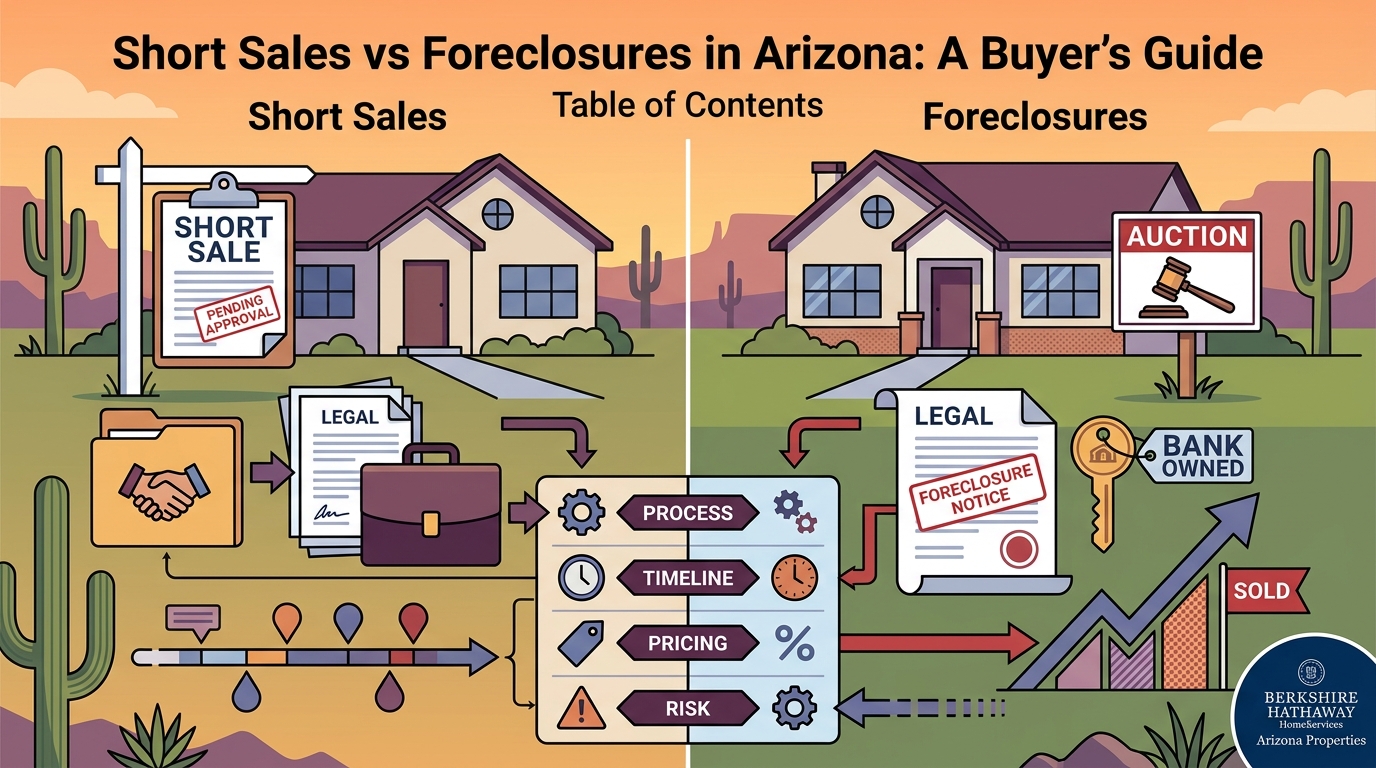
While both short sales and foreclosures offer opportunities for below-market pricing, they differ significantly in terms of process, timeline, and risk. The following table summarizes the key distinctions to help you decide which path aligns with your investment strategy.
| Feature | Short Sale | Foreclosure |
|---|---|---|
| Owner Involvement | Active seller cooperation required | Seller typically absent or uninvolved |
| Timeline | 3 to 6 months for lender approval | Varies; can be faster but unpredictable |
| Property Condition | Often better maintained | Sold "as-is," potential for damage |
| Negotiation | Negotiable with seller and lender | Limited negotiation with bank |
| Risk Level | High (approval uncertainty) | Medium (condition and occupancy risks) |
Financing Your Distressed Purchase
Securing financing for a distressed property requires careful planning and pre-approval from lenders who specialize in these types of transactions. Many conventional lenders are hesitant to finance short sales or foreclosures due to the extended timelines and potential complications. However, there are specialized loan products available that can facilitate these purchases.
For buyers interested in short sales, it is crucial to have a mortgage pre-approval letter that explicitly states the lender's willingness to work with short sale transactions. This demonstrates to the seller and the lender that you are a serious and qualified buyer. You can learn more about how to qualify for a home loan in Arizona to ensure you are prepared for the unique requirements of distressed property financing.
Additionally, buyers should consider the impact of property condition on their financing options. If a foreclosure property requires significant repairs, a conventional loan may not cover the costs. In such cases, an FHA 203(k) loan or a renovation loan might be necessary to finance both the purchase and the repairs. Understanding your financing options early in the process is essential to avoid delays or lost opportunities.
Understanding HUD Homes
HUD homes are a specific type of foreclosure property owned by the U.S. Department of Housing and Urban Development. These properties are typically acquired by HUD after a foreclosure on an FHA-insured mortgage. Buying a HUD home can be an attractive option for first-time homebuyers and investors due to potential discounts and favorable financing terms.
HUD homes are sold through a bidding process, and priority is often given to owner-occupants and non-profit organizations. This means that investors may face competition or restrictions depending on the bidding phase. It is important to work with a real estate agent who has experience with HUD transactions to navigate the bidding process effectively. For more details, visit the Arizona HUD Homes page to see available listings and learn about the application process.
Relocation Considerations
For buyers relocating to Arizona, navigating the distressed property market can be particularly challenging. The local market dynamics, lender requirements, and legal processes vary significantly from other states. Working with a local expert who understands the nuances of the Arizona real estate market is crucial for success.
Relocation services can provide valuable support in identifying suitable properties, coordinating inspections, and managing the complexities of the buying process from a distance. These services ensure that you have a comprehensive understanding of the neighborhoods, schools, and amenities available in your new home. Explore buyer relocation services to see how professional assistance can streamline your move to Arizona.
Frequently Asked Questions
Is a short sale better than a foreclosure?
Neither is inherently better; it depends on your priorities. Short sales often result in better-maintained properties and more cooperative sellers, but they take longer to close. Foreclosures can be purchased faster but are sold "as-is" with potential condition issues.
Can I buy a short sale with a conventional loan?
Yes, but you must ensure your lender is willing to approve a short sale. Not all conventional lenders have the resources or willingness to navigate the lengthy approval process required by the seller's lender.
What is the average timeline for a short sale in Arizona?
The average timeline for a short sale in Arizona is typically between three to six months. This includes time for offer acceptance, lender review, and final approval. Delays can occur if the lender requests additional documentation.
Are HUD homes available to investors?
Yes, investors can purchase HUD homes, but they may not be eligible for priority bidding periods. Owner-occupants and non-profits often get the first opportunity to bid on these properties.
Do I need a real estate agent to buy a foreclosure?
While not legally required, working with an experienced real estate agent is highly recommended. Agents can help you navigate the bidding process, conduct due diligence, and negotiate effectively with the bank or lender.
What is the difference between a HUD home and a foreclosure?
A foreclosure is a general term for a property repossessed by a lender. A HUD home is a specific type of foreclosure owned by the U.S. Department of Housing and Urban Development, usually resulting from an FHA loan default.
How do I find short sale listings in Scottsdale?
Short sale listings are often found through the Multiple Listing Service (MLS) with specific tags indicating their status. Working with a local agent who specializes in distressed properties is the most effective way to access these opportunities.
Start Your Arizona Home Search Today
Navigating the complexities of short sales and foreclosures requires expertise, patience, and a deep understanding of the local market. Whether you are looking for a HUD home, a short sale, or a traditional property, having a trusted partner by your side can make all the difference. Contact Michelle Horowitz to explore featured communities and find your perfect home base in Arizona. Schedule a consultation today to begin your journey toward homeownership.